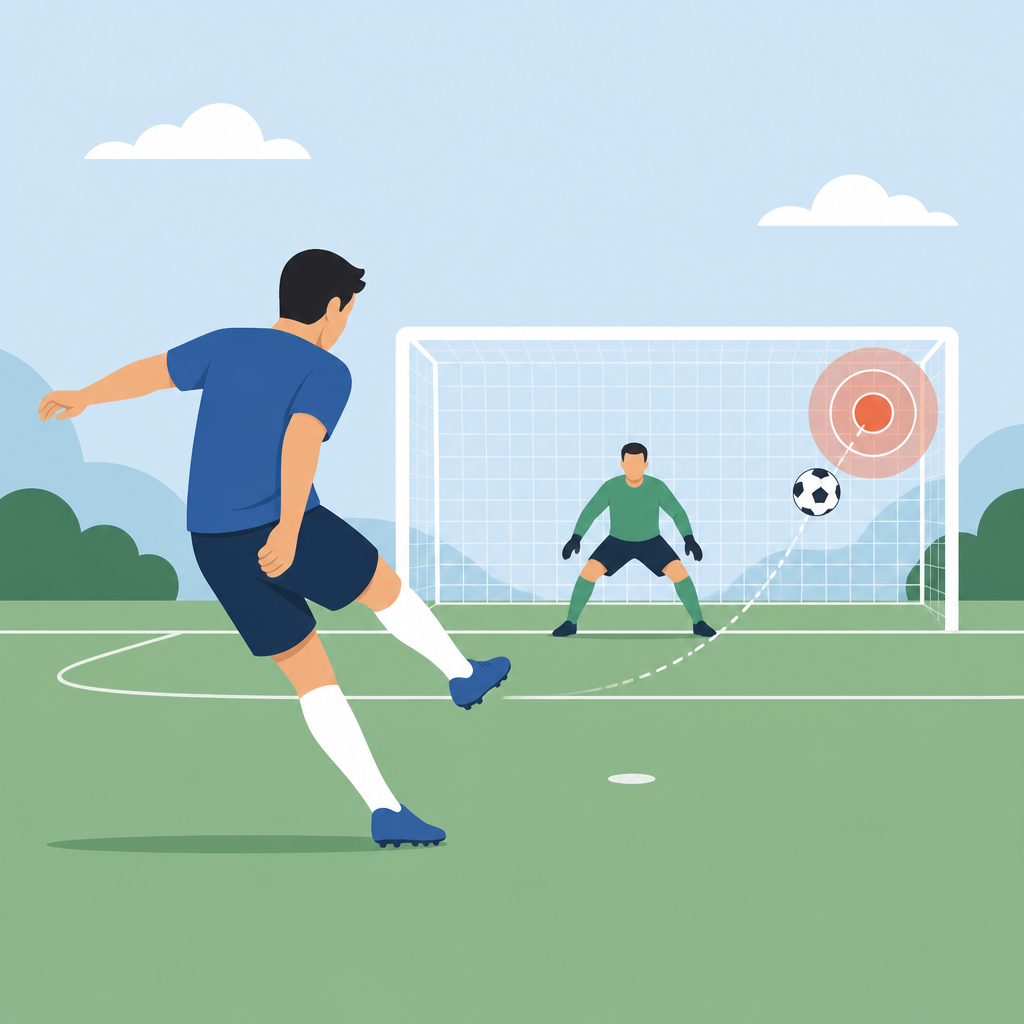
Soccer shooting accuracy is the ability to place the ball where you intend under game speed, defensive pressure, and fatigue. It is not just “finishing” in a general sense. Accurate shooting combines clean striking mechanics, body control, visual scanning, decision-making, and repetition that transfers from training to matches. For junior athletes, this skill often separates a productive attacker from a player who creates chances but does not convert them.
Parents and players ask the same practical question: why do strong athletes still miss the target? In most cases, the issue is not power. It is timing, balance, plant-foot position, hip alignment, and rushed decisions near goal. I see this regularly with players arriving from seasonal programs. They have enthusiasm and decent athletic tools, but their shooting breaks down when defenders close space or when they have only one touch to finish.
Improving soccer shooting accuracy matters because goals change games, and efficient finishers draw attention in competitive Florida environments where coaches watch players closely. College recruiting also rewards output that shows up on film. A striker, winger, or attacking midfielder does not need highlight-reel shots from 25 yards every week. Coaches value players who hit the frame consistently, finish low across goal, and choose the right surface and target in the moment.
At a full-time soccer academy, we treat shooting accuracy as part of complete player development. That means on-field technical work, sports performance training, video analysis, recovery, and mental training all connect. A player who improves first touch, balance, and scanning will usually improve finishing as well. If you want to know how to improve soccer shooting accuracy, start with mechanics, then build decision-making, then test the skill under realistic pressure until it holds up in matches.
Build Correct Shooting Mechanics First
The most direct way to improve soccer shooting accuracy is to clean up technique before increasing volume. Players who simply take hundreds of rushed shots usually reinforce mistakes. Start with the plant foot. It should land beside the ball, generally pointed toward the target, at a controlled distance that allows the striking leg to move freely. If the plant foot is too far behind or too wide, the ball often rises or pulls off line.
Body shape matters just as much. For a driven shot, keep the chest slightly over the ball and the core stable through contact. For a placed finish, open the hips and lock the ankle so the foot presents a clear surface. Many misses come from a soft ankle or from leaning back at impact. That is why younger players who chase power often send shots over the bar. Accuracy comes from repeatable contact, not from swinging harder.
The striking surface should match the finish. Use the inside of the foot for high-percentage placement, especially in one-v-one moments with the goalkeeper. Use the laces when you need pace through traffic or from longer distance. Advanced players also use the outside of the foot to disguise finishes, but that should come after the basics are stable. In training, we cue players to “see the window, set the foot, strike the middle of the task,” meaning the target and body shape must agree.
Train the Details That Actually Change Accuracy
Once mechanics improve, training has to isolate the details that influence ball placement. First touch is one of the biggest. A heavy touch forces a rushed shot and reduces available angles. We spend a great deal of time on touch out of the feet, touch across the body, and touch into space for the next action. Players who can set the ball cleanly with one touch shoot more accurately with the second.
Vision and scanning are also essential. Accurate finishers look early, not only at the moment they strike. They identify the goalkeeper’s position, the far-post window, and the defender closing the shooting lane. This is why game IQ belongs in a shooting conversation. A player may have excellent technique but still miss the best option because the decision came too late. In match analysis, missed chances often start with poor information gathering two seconds before the shot.
Rhythm under pressure deserves attention too. In many academy sessions, we use finishing patterns that begin unopposed, then add passive pressure, then full live pressure. The goal is transfer. A player must learn to keep composure when the heart rate rises. That is also where sports performance training supports finishing. Better deceleration, single-leg stability, and hip strength help players arrive balanced, and balance is one of the clearest predictors of shooting accuracy.
| Training factor | Common problem | Practical correction | Match benefit |
|---|---|---|---|
| Plant foot | Too far from the ball | Set it beside the ball and point it at target | Cleaner line to corners |
| Body posture | Leaning back on contact | Keep chest slightly over ball | More shots stay on frame |
| First touch | Touch runs too far ahead | Cushion into shooting path | More time for composed finishes |
| Scanning | Late read of goalkeeper position | Check goal before receiving | Better target selection |
| Balance | Off-balance at impact | Train deceleration and core control | Higher consistency under pressure |
Use Game-Realistic Finishing Repetition
Not all repetition improves soccer shooting accuracy. Useful repetition looks like the chances you actually get in competition. For wide players, that may mean finishing from cutbacks, back-post runs, or shots after dribbling inside. For strikers, it often means one-touch finishes, near-post runs, rebounds, and shots with a defender on the shoulder. For attacking midfielders, it may include edge-of-box finishes after combination play.
In Florida, year-round outdoor training gives players more opportunities to repeat these patterns at speed. That consistency matters. Seasonal interruptions slow technical retention, especially with a skill as timing-dependent as finishing. Players who train continuously can layer progress more effectively: first clean technique, then speed, then pressure, then tactical variation. Over time, that structure produces better transfer to showcase events, league matches, and tournament play.
Video analysis helps here because players often remember the outcome of a shot but not the process that created it. On film, you can see whether the run started late, whether the supporting angle was poor, or whether the player looked up before finishing. We review details like approach angle, last touch, and goalkeeper cues. This is one reason boutique academy environments help many athletes. Smaller groups allow more individualized feedback instead of generic finishing lines with limited correction.
Improve Accuracy Through Decision-Making and Composure
Good shooters do not aim at random open space. They make fast, informed choices. In the box, the highest-percentage finish is often low and across goal, especially when the goalkeeper sets early. In tight spaces, a quick near-post shot can work if the keeper expects an extra touch. The right answer depends on the angle, pressure, and goalkeeper position. Players improve accuracy faster when they learn chance selection, not just shooting form.
Mental training matters because rushed emotions create technical errors. A player who panics shortens the swing, snatches at the ball, or closes the hips too early. We train composure by adding score pressure, touch limits, and competitive finishing games with consequences. Breathing reset habits also help. One calm exhale before a chance, or between repetitions, can lower tension enough to improve contact quality. This is a small adjustment, but I have seen it help players who overthink in front of goal.
Confidence should come from evidence, not slogans. Track where shots go in training. Note how many are on frame, how many hit the intended target zone, and which foot or pattern causes the most misses. Objective feedback changes behavior. Players often believe their weak foot is the main issue, but charting may show the real problem is shooting after a poor first touch or from a closed body position. Accurate diagnosis is faster than blind repetition.
Create a Long-Term Development Plan
If you want lasting improvement, build a weekly plan instead of relying on occasional shooting sessions. Include technical finishing, small-sided games, speed and agility work, mobility, recovery, and match review. Young players also need realistic volume. Quality matters more than exhaustion. Thirty focused finishes with coaching feedback usually beat 150 uncontrolled strikes. Recovery matters as well, because tired mechanics often become sloppy mechanics.
Parents should look for an environment that connects training pieces instead of treating shooting as an isolated drill. A strong soccer academy schedule includes individualized development, strength and conditioning, tactical coaching, and academic structure that supports year-round progress. For boarding students and international families, that structure is especially important. Consistent daily rhythms reduce stress and allow athletes to focus on technical growth, competition preparation, and college recruiting timelines.
The main takeaway is simple: soccer shooting accuracy improves when mechanics, first touch, scanning, balance, and decision-making are trained together. Players get better faster when sessions are specific, game realistic, and reviewed carefully. Florida’s climate and competition schedule make that process easier to sustain across the year. If you are evaluating the next step, learn more about our soccer academy approach, tour the training environment, and ask how we build personalized finishing plans for serious junior athletes.
Frequently Asked Questions
1. What is the fastest way to improve soccer shooting accuracy?
The fastest way to improve soccer shooting accuracy is to focus on repeatable technique before adding speed, pressure, and complexity. Many players rush straight into hard shooting, but accuracy usually improves faster when the strike is broken down into a few controllable details: a balanced approach, a steady plant foot beside the ball, eyes on the contact point, and a clean follow-through toward the target. In practical terms, that means starting with simple finishing repetitions from short range and aiming for specific corners or zones rather than just “shooting on goal.” Small targets force better concentration and teach players to place the ball instead of hitting it hopefully.
From there, the next step is adding game-like variables without losing form. A strong progression is stationary ball finishing, then one-touch and two-touch shots, then movement into the shot, then finishing after receiving under mild defensive pressure. This matters because true shooting accuracy is not just technical; it depends on body control, visual scanning, and decision-making at realistic speed. Players improve faster when they train the exact situations they see in matches, such as finishing after a diagonal run, shooting after a cutback, or placing a first-time shot across the goalkeeper.
Consistency also beats intensity. Ten to fifteen minutes of focused shooting work several times per week is usually more effective than one long, unfocused session. Players should track simple outcomes such as target hits, shots on frame, and finishes placed to the intended side. That feedback helps turn practice into measurable progress. For junior players especially, the fastest improvement often comes from combining quality technique, purposeful repetition, and a clear standard for what counts as an accurate finish.
2. What shooting technique helps players place the ball more accurately?
The best technique for placing the ball accurately is usually a controlled inside-foot or laces strike with excellent body shape, rather than maximum power. To guide the ball to a precise spot, players need a stable base. The plant foot should land next to the ball, pointed generally toward the target, while the hips and shoulders stay balanced through contact. If the plant foot is too far away, too close, or poorly aligned, the shot often drifts wide or rises unexpectedly. Good shooters make accuracy look simple because their lower body is organized before the foot ever meets the ball.
Contact quality is equally important. For a placement finish, the player should strike through the middle or slightly across the ball depending on the desired curve, keeping the ankle locked and the striking surface consistent. The head should stay still and the chest should remain controlled; leaning back tends to lift the ball, while rushing the swing often causes sliced or mishit shots. A smooth follow-through toward the target helps the body finish the action in the direction the player wants the ball to travel. That is why coaches often talk about “passing the ball into the goal” in certain situations. It reminds players that clean contact and precision usually matter more than force.
Another overlooked part of technique is preparation before the shot. The first touch sets up everything. If the touch is too close to the feet, the player crowds the strike. If it is too far ahead, balance is lost and the shot becomes a reach. Teaching players to create the right ball distance with the setup touch dramatically improves accuracy because it gives them space to align the body and strike cleanly. In short, accurate shooting comes from organized feet, a stable body, and reliable contact, not from swinging harder.
3. How can players stay accurate when shooting under defensive pressure and game speed?
To stay accurate under pressure, players need to train perception and decision-making along with technique. In a match, there is rarely time for a perfect setup, so players must learn to scan early, recognize the goalkeeper’s position, and choose a finish before the defender closes space. That early information reduces panic. Players who wait until the last second to decide where to shoot often snatch at the ball and lose accuracy. A simple habit like checking the goalkeeper and available corners before the final touch can make finishing much calmer and more controlled.
Training should gradually recreate the demands of competition. Instead of only taking uncontested shots, players should finish after sprints, changes of direction, receiving with their back to goal, and shooting with a recovering defender nearby. These drills teach them to control breathing, organize the body quickly, and still produce a clean strike when fatigued or rushed. The goal is not just to score in practice, but to execute the right mechanics when the heart rate is high and the window to shoot is small. This is where true transfer happens from training to games.
Mental composure matters as much as physical execution. Under pressure, young players often try to hit the ball too hard because they fear losing the chance. Ironically, that usually reduces accuracy. A better mindset is to prioritize the target first and let the technique provide enough power. Players should learn that a well-placed shot to the far corner, low across goal, or into the space the goalkeeper leaves open is often more effective than a powerful strike hit directly at the keeper. Composure, scanning, and realistic repetition are what allow technique to survive match conditions.
4. What are the best drills for junior players to improve soccer shooting accuracy?
The best drills for junior players are simple, purposeful, and easy to repeat with quality. One excellent drill is target finishing from close range, where players shoot at small corner goals, cones, or marked zones inside the goal. This teaches placement and gives immediate feedback. Another strong option is first-touch finishing, where a player receives a pass, takes one preparation touch, and aims for a designated area. This builds the connection between receiving and finishing, which is critical because many missed chances come from poor setup rather than poor striking technique.
Movement-based finishing drills are also highly effective. For example, a player can start outside the box, make a timed run onto a pass, and finish with one or two touches into a called corner. This adds timing, body adjustment, and directional control. Cutback finishing is another valuable drill because it replicates common match scenarios. The player arrives onto a square or backward pass and must guide the ball first time or with one touch into a target zone. Since many youth attackers get chances from wide service, this pattern has excellent real-game relevance.
To make drills truly useful, coaches and parents should emphasize quality over volume. It is better to take fewer shots with a clear target and specific coaching point than to blast dozens of random attempts. Drills should also include both feet, different approach angles, and periods of fatigue so the skill becomes more adaptable. A helpful structure is to begin with technical accuracy work, then add movement, then add pressure or competition. That progression keeps fundamentals intact while steadily moving closer to match demands. For junior athletes, the best drills are the ones that build confidence, precision, and transfer to real chances in games.
5. How often should players practice shooting accuracy, and how can parents help?
Players usually improve most when they practice shooting accuracy consistently two to four times per week, even if the sessions are short. Accuracy is a skill that responds well to frequent, high-quality repetition. A focused 15- to 25-minute session can be enough when the player is attentive and the drill design is clear. The key is regular exposure to clean mechanics, purposeful targets, and realistic finishing scenarios. Long sessions are not automatically better, especially for younger players. Once technique fades and concentration drops, players may just be rehearsing poor habits.
Parents can help by creating structure without turning training into pressure. That might mean setting up cones as target zones, serving simple passes, or helping track results such as how many shots hit the intended area out of 20 attempts. Objective feedback is valuable because it shows whether improvement is real. Parents do not need to over-coach technique if they are not experienced in the game. In many cases, their best role is to encourage focus, make repetition possible, and keep the environment positive and consistent.
It also helps when parents and players understand that shooting accuracy develops over time and should be trained as a full performance skill, not just as “finishing.” Good habits include practicing both feet, using game-like movement, and mixing in shots when slightly fatigued. Players should also review what types of chances they miss most often in games, because training should match those needs. If a player regularly rushes breakaways, mistimes first-time finishes, or pulls shots wide under pressure, practice should address those exact situations. With steady repetition, thoughtful feedback, and realistic expectations, junior players can make noticeable gains in shooting accuracy that carry into matches.