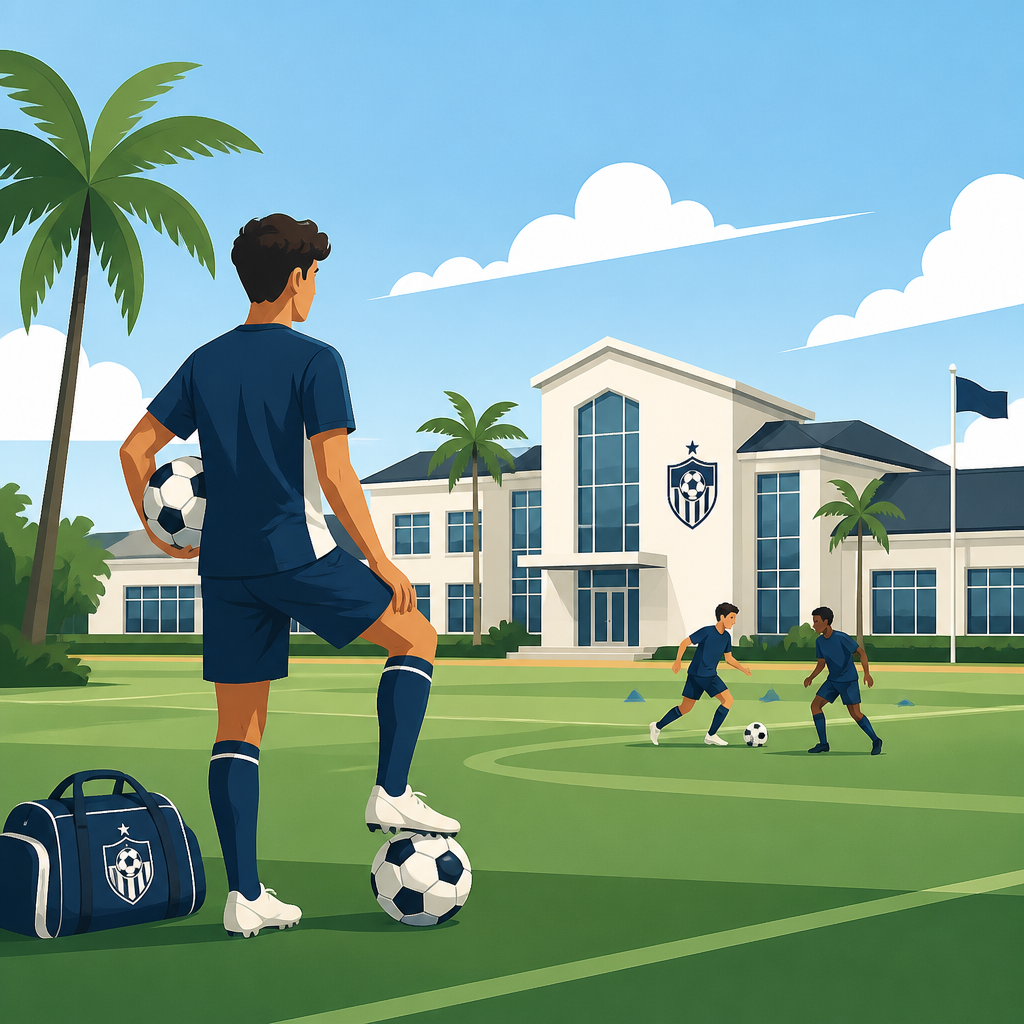
Florida offers one of the strongest environments in the country for serious soccer development, which is why families often search for the best soccer boarding schools in Florida for elite players. In this context, a soccer boarding school is a full-time training environment where a junior athlete lives on campus or in supervised housing while combining structured academics with daily soccer development. For competitive players ages 12 to 18, that model can solve a common problem: local club schedules, school demands, and travel often pull development in too many directions at once.
Parents usually want clear answers before considering a move. They want to know whether a boarding school for athletes improves college recruiting, whether Florida truly provides a year-round advantage, and how daily life works in practice. From years of working with academy families, we have seen that the strongest programs are not defined by branding alone. They are defined by coaching quality, individualized player development, competition level, academic coordination, recovery structure, and how well the staff manages the recruiting timeline.
Florida matters because weather affects repetition, and repetition drives progress. In cold-weather states, winter often forces players indoors, reduces field time, and compresses match play into shorter seasons. In Florida, outdoor training can continue through every month of the year. That means more touches, more tactical sessions, more film review tied to live training, and more access to showcases and college coaches who regularly recruit in the state.
Elite players also need the right definition of “best.” The best soccer boarding school is not automatically the largest program or the one with the most teams. For many families, the better fit is a boutique academy with smaller training groups, direct coach access, and a development plan tailored to the player’s position, athletic profile, academic path, and recruiting goals. That is especially important for center backs, holding midfielders, goalkeepers, and late-developing players who need precise feedback instead of generic volume.
What Makes a Soccer Boarding School in Florida Worth Considering
A strong soccer boarding school should combine four elements: consistent on-field training, sports performance support, academic structure, and recruiting guidance. If one piece is missing, progress usually stalls. We have worked with players who trained hard but had weak academic oversight, and others who played strong schedules but lacked individual technical correction. Both situations limited long-term results.
On the soccer side, families should expect technical training, positional work, tactical instruction, small-sided play, full-team sessions, match analysis, and periodized strength and conditioning. Good programs do not simply add more sessions. They organize training loads to improve first touch, passing under pressure, transition speed, finishing quality, defensive shape, and 90-minute stamina without pushing athletes into avoidable overuse.
Boarding also adds structure that many serious players need. Supervised housing, set study hours, scheduled meals, recovery routines, and transportation planning remove friction from development. Instead of rushing from school to training to homework every day, the athlete follows one integrated schedule. That consistency helps both performance and emotional stability, especially during demanding recruiting years.
Why Florida Gives Elite Soccer Players a Development Edge
Florida’s climate advantage is practical, not theoretical. Players can train outdoors year-round, adapt to heat, and build match fitness across all seasons. Outdoor repetition matters for receiving driven passes, judging longer balls, defending space, and making decisions at game speed. Those details are harder to replicate consistently in winter indoor environments.
Competition density is another factor. Florida hosts strong club competition, showcases, and recruiting events that draw college coaches from NCAA programs across the country. For an elite player, regular access to meaningful matches shortens the feedback loop. A coach identifies a problem in transition defending on Tuesday, trains it on Wednesday and Thursday, and sees whether it holds up in competition that weekend.
Florida also attracts international families and out-of-state athletes. That creates training groups with varied styles and higher standards. A striker may face faster center backs. A winger may train against players who defend more physically. Exposure to different rhythms and tactical habits improves adaptability, which is exactly what college coaches value when evaluating whether a recruit can handle a higher level.
How to Evaluate the Best Soccer Boarding Schools in Florida
Families should evaluate programs by development systems, not promises. Ask how coaches assess the athlete on arrival. Ask how training groups are formed. Ask how often players receive video analysis and whether feedback is position-specific. A serious academy should be able to explain how it develops fullbacks differently from central midfielders and how goalkeepers are integrated into team and specialized sessions.
| Evaluation Area | What Strong Programs Provide | Why It Matters |
|---|---|---|
| Coaching structure | Licensed coaches, small-group sessions, individual feedback | Players improve faster when correction is specific and consistent |
| Training plan | Technical, tactical, physical, and recovery periodization | Prevents random workloads and supports long-term development |
| Competition schedule | League play, showcases, friendlies, and video review | Match exposure must connect to measurable learning |
| Academics | Study supervision, school coordination, travel support | Recruiting depends on eligibility and transcript stability |
| Recruiting support | Highlight video guidance, recruiting emails, timeline planning | Good players are missed when exposure is poorly managed |
| Boarding life | Supervision, meals, transportation, communication with parents | Structure affects safety, health, and consistency |
Parents should also ask about coach-to-athlete ratio. In larger settings, talented players can blend into the middle quickly. In smaller programs, coaches can track body language, effort, recovery, and decision-making patterns over time. That is often where player development separates. Technical details improve when coaches know the athlete well enough to connect mistakes to fatigue, confidence, or tactical misunderstanding.
Academics, Boarding Life, and Daily Schedule Expectations
Elite soccer development only works when academics are organized. College coaches care about transcripts, test planning where relevant, communication habits, and whether a player can handle responsibility. A quality boarding environment builds these habits into the week. Players attend classes or follow approved schooling pathways, complete supervised study hours, and receive support during tournament travel.
Parents often ask what daily life actually looks like. In a well-run academy, mornings may include classes, mobility work, or strength training. Afternoons usually focus on field sessions, positional training, and team tactics. Evenings include dinner, study time, recovery, and lights-out standards that support sleep. The goal is not to keep athletes busy. The goal is to manage energy so they can train hard repeatedly without academic drift.
Boarding life should also support maturity. Living away from home teaches time management, communication, and accountability. For international students, the transition can be larger, so schools should provide clear orientation, housing supervision, and academic coordination. Families should expect support, but they should also expect athletes to grow through the routine.
College Recruiting Pathways for Boarding School Soccer Players
One major reason families consider soccer boarding schools in Florida is college recruiting. A full-time environment can improve exposure, but only when the process is structured. Freshmen and sophomores should focus on development, academics, and building a reliable match record on video. By sophomore and junior years, players should have a recruiting profile, short highlight video, updated schedule, and targeted outreach list based on realistic fit.
College coaches usually evaluate more than raw talent. They look for consistency, speed of play, tactical understanding, physical readiness, coachability, and academic reliability. Position matters. A center midfielder must show scanning, passing range, tempo control, and defensive work rate. A striker must show movement, timing, finishing variety, and pressing habits. Generic highlight clips without context do little.
Academies help most when they connect development to exposure. That includes selecting appropriate showcases, advising families on communication timing, and producing useful film. It also means honesty. Not every athlete should target the same level. Good recruiting guidance matches the player’s level, transcript, personality, and long-term goals with the right college environment.
Common Mistakes Families Make When Choosing a Program
The first mistake is choosing based on reputation alone. A famous name does not guarantee the right environment for an individual player. Some athletes need a larger competitive ecosystem. Others improve faster in a boutique academy with more touches, more accountability, and less risk of being overlooked.
The second mistake is valuing volume over design. More sessions are not always better. Without periodization, recovery, and technical intent, extra training can flatten performance. We have seen players arrive from overloaded schedules with heavy legs, inconsistent concentration, and plateaued decision-making.
The third mistake is treating recruiting as separate from development. Recruiting outcomes improve when the player’s training, match selection, academics, and communication plan all align. Families should ask to see how the academy structures that process over multiple years, not just during showcase season.
How to Choose the Right Fit for Your Athlete
The best soccer boarding school in Florida for elite players is the one that fits the athlete’s current level and next objective. Start with an honest assessment of technical ability, athletic profile, resilience, academic habits, and recruiting timeline. Then compare coaching access, training methodology, boarding structure, and competition opportunities. If possible, visit the campus, observe a session, and ask how progress is tracked month to month.
For many families, Florida remains the strongest choice because it combines year-round training, recruiting visibility, and a competitive environment that pushes serious players forward. The right boarding school can simplify life, sharpen development, and create a clearer path to college soccer. If you are comparing options, start by requesting an admissions conversation, reviewing the daily schedule, and asking how the academy builds an individualized development plan for your player.
Frequently Asked Questions
What makes a soccer boarding school in Florida a strong choice for elite players?
A soccer boarding school in Florida gives serious players a full-time development environment that is difficult to replicate through a traditional local club model. Instead of balancing school, commuting, and limited evening training, athletes live in a structured setting where academics, recovery, nutrition, strength work, and soccer development are all coordinated around long-term performance. For elite players between ages 12 and 18, that kind of consistency matters. It allows for more touches on the ball, more tactical learning, more individualized coaching, and better day-to-day habits.
Florida is especially attractive because of its year-round training climate, deep soccer culture, and access to high-level competition. Players can train outdoors through most of the year, which supports technical repetition and regular match play without the long winter interruptions common in colder states. Many top programs in Florida also attract ambitious domestic and international players, so the training environment tends to be competitive and demanding. That daily standard often helps serious athletes improve faster than they would in a less concentrated setting.
For families searching for the best soccer boarding schools in Florida for elite players, the biggest advantage is not simply more training hours. It is the integration of every part of development: coaching, education, supervision, athletic performance, and college or professional pathway support. The strongest programs create an environment where players can pursue soccer at a high level without sacrificing academic progress or personal growth.
How is a soccer boarding school different from a regular club soccer program?
The main difference is that a soccer boarding school is built around full immersion. In a regular club model, a player typically attends a standard day school, then travels to club training in the evenings several times per week. That setup can work well for many athletes, but it often creates limits. Training time may be restricted, commuting can be exhausting, recovery may be inconsistent, and school demands are usually managed separately from soccer goals.
At a boarding school, the athlete lives on campus or in supervised housing and follows a daily schedule designed to support performance and development. Training is usually more frequent and more closely monitored. Players may have technical sessions, team sessions, video analysis, strength and conditioning, mobility work, and recovery protocols all within the same weekly plan. Because the academic program is integrated into the environment, there is often more structure around study time, attendance, and academic support as well.
Another important difference is access to staff. In a high-level boarding environment, players are often around coaches, trainers, academic advisors, and residential staff throughout the day. That allows for quicker feedback, stronger accountability, and more personalized development plans. For elite players who need a more serious pathway than local club soccer can provide, boarding schools can offer a more complete and professionally organized system.
What should families look for when comparing the best soccer boarding schools in Florida for elite players?
Families should evaluate far more than the school’s marketing, facilities, or win-loss record. The first priority should be the quality of the development model. That includes the coaching staff’s experience, the training methodology, the balance between technical and tactical work, and whether the program has a clear plan for different age groups and stages of development. A strong school should be able to explain how it helps players improve, not just where its teams compete.
Competition level is also critical. Families should ask what leagues the teams play in, what kinds of showcases or tournaments are included, and whether players are consistently challenged by high-level opponents. For older players, especially those targeting college recruitment or professional pathways, exposure opportunities matter. That includes contact with college coaches, access to recruiting guidance, and a track record of helping graduates move into strong next-step environments.
Academics should be examined just as closely as soccer. Families should review class size, curriculum strength, teacher support, college counseling, and scheduling flexibility for athletes. A true elite environment supports both the student and the player. It is also important to understand the residential side of the program: housing supervision, safety protocols, meal quality, transportation, mental wellness support, and communication with parents. The best soccer boarding schools in Florida for elite players are the ones that combine high standards on the field with strong academics, responsible oversight, and a healthy day-to-day environment.
Are soccer boarding schools in Florida only for players who want to go pro?
No. While many players choose this path because they have ambitious long-term goals, soccer boarding schools are not only for athletes aiming at a professional career. In fact, many families select this model because it offers a more structured and development-focused environment than a traditional school-plus-club schedule. Some players want to compete at the NCAA level. Others want stronger coaching, better competition, or a setting that pushes them to grow in maturity and independence. A boarding school can support all of those goals.
For many students, the value of the experience goes beyond soccer outcomes. Living in a structured environment teaches time management, accountability, resilience, and self-discipline. Students learn how to balance training, academics, recovery, and daily responsibilities. Those habits can benefit them in college and in life, whether they continue in soccer or not. The best programs understand that even highly talented players need a broad foundation that includes education, character development, and life skills.
That said, families should be realistic about fit. A boarding school is most appropriate for players who genuinely want a high-commitment environment. The schedule is demanding, expectations are high, and daily routines are more disciplined than what many players experience at home. For motivated athletes, that can be exactly what they need. For others, a less intensive pathway may be more appropriate. The right choice depends on the player’s goals, maturity, and readiness for a full-time development model.
At what age should a player consider a soccer boarding school in Florida, and how can families decide if the timing is right?
Most soccer boarding schools serving elite players work with students roughly between ages 12 and 18, but the right timing depends less on age alone and more on readiness. Some players benefit from entering a boarding environment in middle school or early high school because they are already highly motivated, independent, and eager for a more serious development structure. Others are better served by waiting until later in high school, when they have a clearer sense of their soccer goals and are emotionally ready to live away from home.
Families should evaluate several areas before making the move. First, consider the player’s level and ambition. If the athlete is clearly outgrowing the local training environment, needs stronger competition, or is struggling to balance school and elite soccer demands, a boarding model may make sense. Second, assess maturity. Living away from home requires responsibility, adaptability, and the ability to handle a demanding routine. Third, look at academics. The transition should strengthen the student’s educational path, not disrupt it.
It is also wise to speak directly with coaches, academic staff, and residential leaders before enrolling. Ask how new students are supported, how training loads are managed, how communication with parents works, and how the program handles injuries, academic challenges, and emotional adjustment. If possible, visit the campus, watch training, and talk to current families. The best decision is usually the one that matches the player’s developmental stage, personality, and long-term goals. When the timing is right, a soccer boarding school in Florida can be a powerful step forward for an elite player.