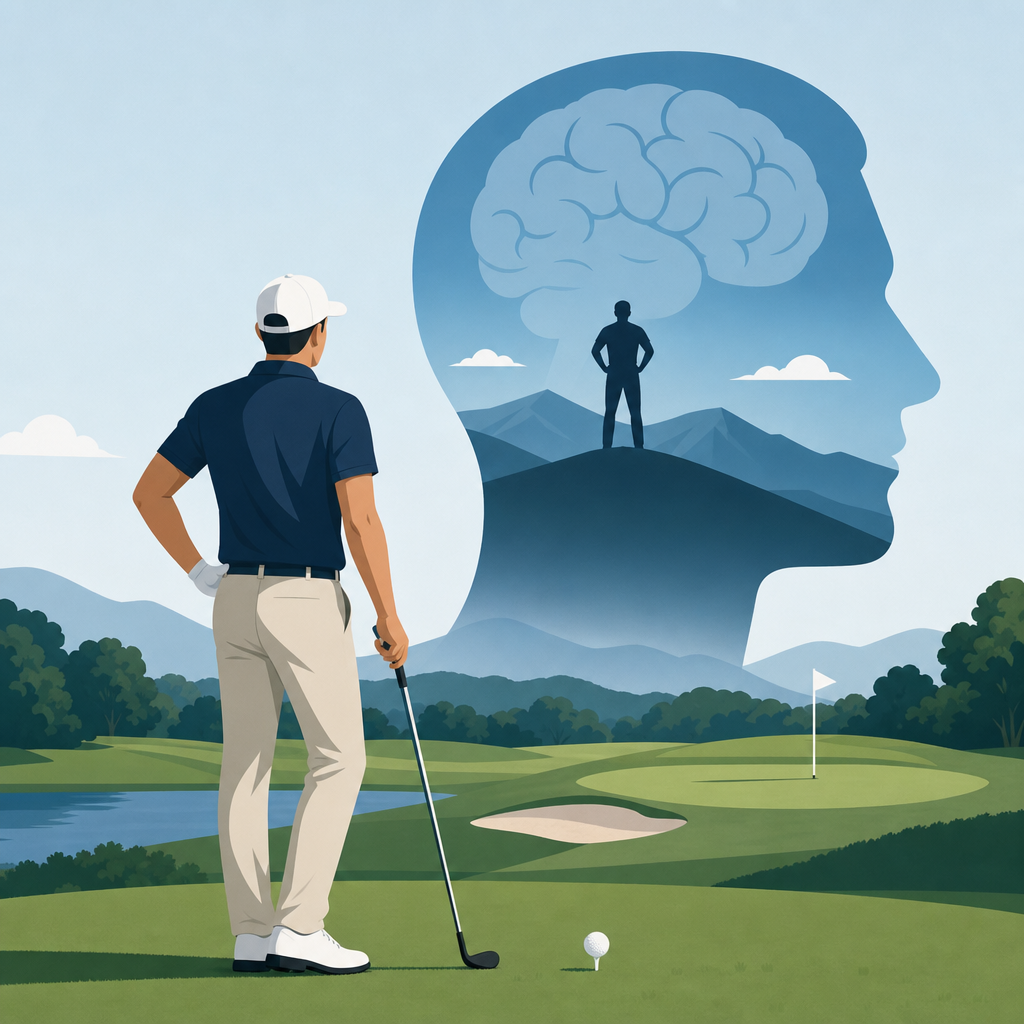
Mental toughness training for golfers is the structured process of building focus, emotional control, resilience, and decision-making so a player can execute the right shot under pressure. In junior golf, talent alone does not hold up over 18 holes, across a two-day tournament, or through a recruiting season. Players who score consistently learn to manage nerves, recover from mistakes, and stay committed to a plan when the round gets uncomfortable.
At our golf academy in Florida, we see this every week. A player may stripe balls on the range, post strong launch monitor numbers, and still lose shots because one bad hole changes body language, tempo, and club selection for the next four holes. That is why mental training is not an add-on. It is a core part of player development, just like swing mechanics, short game practice, strength and conditioning, and course management.
For parents, mental toughness matters because tournament golf exposes every weakness in routine, confidence, and recovery habits. For junior athletes, it matters because college coaches evaluate more than a scorecard. They notice pace, composure, decision quality, and how a player responds after a double bogey. In a scholarship-focused pathway, those habits can separate a recruitable golfer from a talented player who remains inconsistent.
What Mental Toughness Means in Golf
Mental toughness in golf is not blind confidence or emotionless play. It is the ability to stay present, follow a repeatable routine, and make disciplined decisions regardless of score, weather, pairing, or momentum. In practical terms, it shows up as commitment over the ball, smart targets, calm breathing after mistakes, and steady effort on every shot.
Golf creates unique pressure because players have time to think. In tennis or soccer, competition moves quickly. In golf, the walk between shots can either reset the mind or let doubt grow. Junior golfers often struggle with outcome thinking, especially after a poor drive, a missed three-footer, or a leaderboard update. Mental toughness training teaches them how to narrow attention to controllable tasks.
We usually break the skill into four parts: focus, emotional regulation, confidence, and resilience. Focus keeps attention on the next shot. Emotional regulation prevents frustration from changing tempo or strategy. Confidence allows committed swings without steering the club. Resilience helps a player recover when the round stops matching expectations.
Why Junior Golfers Need Structured Mental Training
Many players assume mental strength arrives naturally with age. In reality, it improves when coaches train it deliberately. Junior golfers face tournament travel, school demands, rankings pressure, recruiting conversations, and social comparison. Add Florida’s year-round competition calendar, and mental habits get tested often.
Structured training matters because pressure rarely reveals new skills. It reveals existing habits. If a golfer never practices breathing under stress, never uses a post-shot reset, and never reviews decisions objectively, tournament pressure will expose those gaps. A player may know what to do, but under stress, knowledge without rehearsal breaks down.
Parents often ask whether mental toughness can be taught. Yes, but it must be coached like any other performance skill. We teach routines, decision checkpoints, self-talk scripts, reflection tools, and scoring games that create consequences in practice. Over time, the goal is simple: make the player’s response to pressure more automatic and more stable.
Core Skills Every Competitive Golfer Should Train
The most effective mental toughness training for golfers focuses on repeatable skills rather than vague motivation. These are the areas we prioritize because they transfer directly to tournament scoring and recruiting-level consistency.
| Skill | What It Looks Like on the Course | How We Train It |
|---|---|---|
| Pre-shot routine | Same sequence before each shot, clear target, committed swing | Repetition on range, timed routine work, pressure drills |
| Breath control | Lower tension before tee shots, putts, and recovery shots | Box breathing, exhale cues, between-shot reset practice |
| Self-talk | Instructional and neutral internal language instead of panic | Keyword scripts, journaling, post-round review |
| Emotional recovery | Bounce back after bogeys, bad bounces, or missed putts | Reset routines, one-shot response drills, reflection prompts |
| Decision discipline | Smart targets, club choice based on percentages, not ego | Course management scenarios, stats review, coach debriefs |
| Confidence under pressure | Committed swings late in the round and in qualifying events | Consequence games, competitive practice, visualization |
These skills work together. A player with a strong routine but poor emotional recovery can still unravel after one mistake. A player with confidence but weak decision discipline may attack pins when the smart play is center green. Mental training becomes effective when golfers treat it as an integrated system, not a collection of isolated tips.
Pre-Shot and Post-Shot Routines That Hold Up in Competition
A reliable routine is the backbone of mental toughness in golf. Before the shot, the player needs a consistent sequence that includes target selection, a rehearsal feel, one clear swing thought or cue, and committed execution. The routine should be simple enough to repeat on the first tee, from the fairway, and over a must-make putt.
We encourage golfers to separate planning from playing. Planning happens behind the ball. That is where you assess lie, wind, yardage, shape, and target. Playing begins once you step in. At that point, analysis stops. Many juniors make the mistake of thinking all the way through the motion. That usually creates tension and indecision.
The post-shot routine matters just as much. Players need a brief response window, then a reset. We often use a simple structure: react, reflect, refocus. React for a few seconds. Reflect only on the decision or commitment, not on self-judgment. Then refocus on the walk and the next task. This prevents one poor swing from becoming a stretch of careless golf.
Handling Pressure, Mistakes, and Tournament Momentum
Pressure in golf is not the problem. Poor responses to pressure are the problem. The athlete who learns to identify physical tension, rushed thinking, and score-focused attention can interrupt the spiral before it affects execution. That is why awareness training is important. Players need to know their personal pressure signals.
Common signs include fast breathing, quick transitions, extra practice swings, silence after mistakes, and aggressive targets after bogeys. Once identified, those patterns can be replaced. A golfer might use one long exhale before stepping in, a cue word such as “commit,” or a walking reset between shots to lower arousal and regain control.
Tournament momentum is also misunderstood. Many juniors think a bad hole destroys the round. It does not. One double bogey hurts, but the bigger damage usually comes from the next two holes. Mentally tough golfers stop the leak. They make a disciplined club choice on the next tee, play to a safe target, and rebuild the round one swing at a time.
This is where course management and mental training overlap. If you are pressing because of score, you are more likely to chase hero shots. Good coaches teach players that emotional discipline and scoring discipline are connected. Sometimes the toughest shot in golf is the conservative one.
Practice Methods That Actually Build Mental Toughness
Mental toughness does not improve from reading quotes or talking about confidence. It improves when practice creates consequence, uncertainty, and accountability. On the range, we build pressure by assigning targets, requiring a streak, or ending sessions only after a player completes a specific challenge. In the short game area, we use up-and-down games where misses carry a score penalty.
On-course practice is even more valuable. A player can simulate a tournament nine with one ball, strict rules, full routine use, and score tracking. We also use worst-ball formats, pressure putting ladders, and decision audits. After the round, the golfer reviews not just score, but commitment, target quality, and emotional responses on key holes.
Video analysis helps here. When players see body language after mistakes or watch how tempo changes under pressure, the lesson becomes concrete. Training journals also matter. A simple log of what the player felt, what triggered mistakes, and what reset worked builds self-awareness faster than vague memory.
The Role of Parents, Coaches, and Academy Structure
Mental toughness develops faster when the environment is consistent. Coaches need shared language around routines, response habits, and decision quality. Parents need to support the process without turning every round into a verdict on talent. The car ride home after a tournament can either strengthen resilience or undermine it.
For parents, the best support is specific and calm. Ask what decisions felt strong, where focus slipped, and what the next practice block should target. Avoid emotional replay of every mistake. Junior golfers need accountability, but they also need room to process performance without feeling that one event defines their future.
In a full-time academy setting, structure helps. Year-round training in Florida gives players repeated exposure to tournaments, changing conditions, and competitive pressure. That repetition matters. Mental skills improve when players test them often, review them honestly, and refine them within a personalized development plan that includes technical coaching, sports performance training, recovery, and academic balance.
How Mental Toughness Supports College Golf Recruiting
College coaches want players who can help a lineup travel, compete, and recover. They look at scoring, tournament history, and ranking, but they also value traits that are harder to measure. Body language, discipline, coachability, and composure affect whether a player can handle qualifying rounds, team expectations, and academic demands.
A junior golfer with stable routines and strong emotional control often becomes more recruitable because consistency improves. Scores hold up better across multiple rounds. Communication with coaches becomes stronger. Recruiting videos and event exposure also benefit when the player presents as organized, mature, and self-aware.
Mental toughness will not replace technical development. It will not erase a weak short game or poor distance control. But it allows physical skill to transfer more reliably to competition. That is the real value. Golfers do not need perfect emotions. They need dependable responses.
Mental toughness training for golfers works when it becomes part of everyday development, not a last-minute fix before a big event. Build a repeatable routine. Train breathing and self-talk. Review decisions honestly. Practice with consequence. If you want a junior golfer to compete more consistently in Florida’s demanding year-round environment and prepare for college golf, start by evaluating the mental skills behind the swing, then learn more about our RPS Golf Academy development process.
Frequently Asked Questions
What is mental toughness training in golf, and why does it matter so much for junior players?
Mental toughness training in golf is the intentional development of the habits, routines, and thought patterns that help a player stay focused, composed, and decisive before, during, and after every shot. It includes skills such as emotional control, concentration, confidence, self-awareness, resilience after mistakes, and the ability to make smart decisions under pressure. In golf, physical talent can get a player noticed, but mental consistency is often what determines whether that talent actually produces scores over 18 holes, through a two-day event, or across an entire tournament season.
For junior golfers, this matters even more because competitive golf regularly puts them in situations they cannot control. They face nerves on the first tee, frustration after a bad bounce, pressure when they are playing well, and mental fatigue late in the round. A player who has not trained for those moments often starts reacting emotionally instead of executing with discipline. That can lead to rushed decisions, poor club selection, loss of commitment, and compounding mistakes.
At a high level, mental toughness is not about pretending pressure does not exist. It is about learning how to function well when pressure does exist. Players who become mentally tough are able to reset quickly, trust their process, and keep competing even when the round becomes uncomfortable. That is why mental training is such a critical part of long-term junior golf development. It helps talented players turn potential into reliable performance.
How can mental toughness help a golfer perform better under pressure in tournaments?
Mental toughness helps golfers perform under pressure by giving them a repeatable system for handling nerves rather than being controlled by them. Tournament pressure tends to narrow attention, speed up tempo, and create doubt. Without training, many players become outcome-focused. They start thinking about scores, rankings, qualifying spots, or what others might say if they fail. Once that happens, their attention shifts away from the one thing they can control: the next shot.
A mentally tough golfer learns to recognize pressure early and respond with structure. That usually means slowing down, returning to a pre-shot routine, breathing with purpose, choosing a specific target, and making a committed swing. These simple actions restore control because they move the player away from emotional reaction and back into execution mode. Pressure never fully disappears, but it becomes more manageable when the player knows exactly how to respond to it.
This is especially important in tournament situations where one mistake can feel bigger than it is. Players with strong mental training do not let one bogey turn into three bad holes. They recover faster, stay patient, and continue making high-quality decisions. Over time, that ability separates golfers who occasionally play well from golfers who score consistently when it matters most. In competitive junior golf, that consistency is often what opens doors in rankings, recruiting, and long-term development.
What are the most important mental skills junior golfers should train?
The most important mental skills for junior golfers usually include focus, emotional regulation, resilience, confidence, discipline, and decision-making. Focus is the ability to stay present and direct attention to the right task at the right time. In golf, that means not drifting into past mistakes or future outcomes. Emotional regulation is the skill of managing frustration, nerves, anger, or disappointment so those feelings do not interfere with the next decision or swing.
Resilience is another major skill because golf guarantees adversity. Every player will hit poor shots, get unlucky breaks, and experience rounds that do not go according to plan. Resilient golfers accept that reality and recover quickly instead of carrying mistakes forward. Confidence is also essential, but real confidence is not just positive thinking. It is built through preparation, repetition, honest feedback, and proof that the player can trust a process under pressure.
Discipline and decision-making may be the most underrated mental skills in junior golf. Many players lose shots not because they lack swing ability, but because they force risky shots, abandon strategy, or let emotion influence club selection. Training a player to stay committed to smart decisions is a huge part of scoring well. The best mental training programs teach golfers how to think clearly, choose wisely, and stay consistent even when emotions rise. That is what makes mental toughness practical, not just motivational.
How do golfers train mental toughness in a way that actually carries over to the course?
Mental toughness improves most when it is trained the same way physical and technical skills are trained: consistently, intentionally, and in realistic situations. The biggest mistake golfers make is treating mental training as something separate from performance. In reality, it needs to be built into practice, competitive games, and on-course routines. A player may understand mental concepts in theory, but the goal is to make those skills usable when pressure shows up for real.
Effective training often starts with clear routines. Pre-shot routines help players settle attention, commit to a target, and swing with more trust. Post-shot routines help them respond correctly whether the result is good or bad. Breathing work, visualization, journaling, and reflection can also be valuable when they are used with purpose. For example, a player might review where they lost focus during a round, what triggered emotional reactions, and how they can respond better next time.
Another key piece is pressure practice. Junior golfers need opportunities to perform with consequences, accountability, and discomfort. That can include scoring challenges, competitive drills, must-make putting games, or simulated tournament scenarios. These environments expose habits that stay hidden during casual practice. At a serious golf academy, mental training is often integrated with technical coaching and on-course strategy so the player learns how to think, decide, and compete as one complete system. That kind of training creates transfer because it mirrors the demands of tournament golf.
Can mental toughness be taught, or is it something golfers are simply born with?
Mental toughness can absolutely be taught and developed. Some golfers may naturally appear calmer, more confident, or more competitive, but that does not mean mental performance is fixed. In most cases, what people call mental toughness is really a set of trainable skills and behaviors developed over time. Players learn how to respond to pressure, how to reset after mistakes, how to keep perspective, and how to stay committed when they are uncomfortable.
This is encouraging for junior golfers and parents because it means mental performance does not have to be left to chance. A player who currently struggles with nerves, anger, self-doubt, or inconsistency is not stuck that way. With structured coaching, repeated practice, and honest reflection, those patterns can change. The same way a golfer improves mechanics through guided repetition, they can improve their mindset through guided mental training.
At a strong development program, the goal is not to create a robotic player with no emotion. The goal is to build a competitor who understands their reactions, manages them well, and keeps making quality decisions throughout the round. That is what mental toughness looks like in real golf. It is not a personality trait reserved for a few gifted athletes. It is a trainable advantage, and for junior golfers who want to perform consistently and compete at a high level, it can become one of the most important parts of their development.