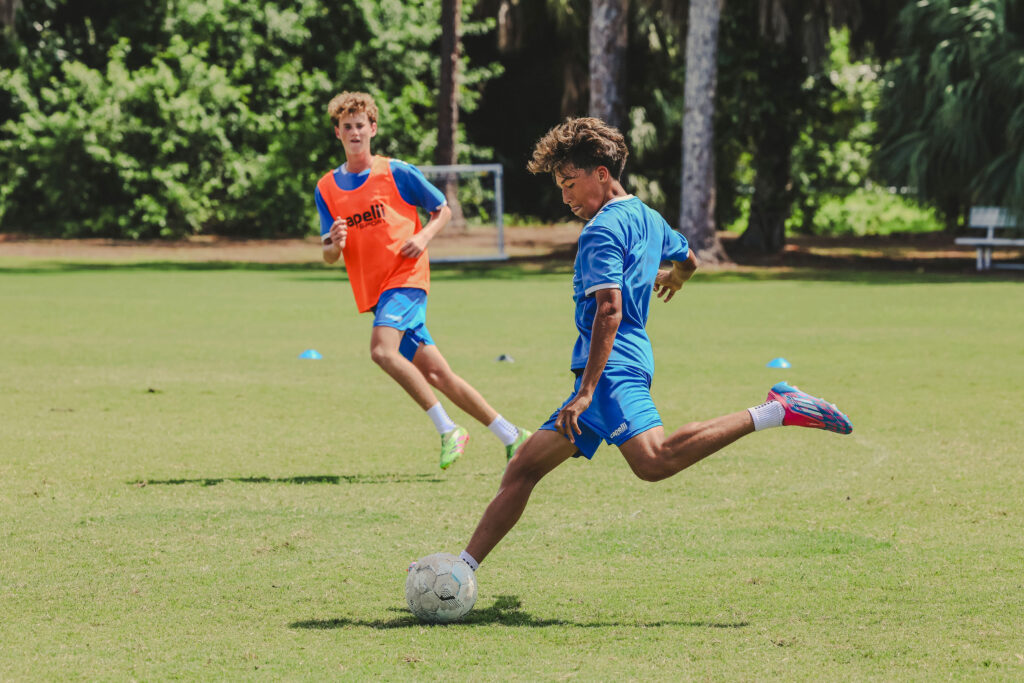
For many players, the dream starts on a small field: scoring the winning goal, wearing their favorite team’s jersey, imagining stadium lights on a big night. As they grow, that dream often evolves into something more specific—playing college soccer, representing a university, and getting help with tuition. Turning that vision into an actual soccer scholarship feels exciting, but the pathway can be confusing for families trying to navigate clubs, showcases, highlight videos, and college coaches’ emails.
This guide breaks the process into clear, manageable steps so you can plan, prepare, and communicate with confidence—without losing sight of your child’s long-term development and well-being.
1. Understand the College Soccer Landscape
Before you can choose targets, you need the map. In the U.S., most college opportunities are grouped into:
- NCAA Division I – Highest visibility and competition level for many programs.
- NCAA Division II – Strong soccer with a balance of athletics, academics, and campus size.
- NCAA Division III – No athletic aid, but strong academic merit and need-based aid options.
- NAIA – Competitive programs, often with more flexibility in recruiting and scholarship rules.
- NJCAA (Junior College) – Two-year schools that can be powerful launchpads to four-year programs.
Each level has different expectations for technical ability, tactical understanding, physical attributes, and academic records. The “right” level is where your child can compete, develop, and contribute—not just the biggest name on TV.
2. Get an Honest Snapshot of Where You Are Now
Coaches recruit on what they see now and where they think a player can be in 1–3 years. Start by assessing:
- Technical base – First touch, passing quality, ball mastery under pressure.
- Position-specific skills – Defenders, midfielders, forwards, and goalkeepers each have different expectations.
- Physical profile – Speed, stamina, strength, agility, and injury history.
- Game understanding – Off-ball movement, decision-making, and tactical awareness.
- Competitive level – Club level, league strength, showcase experience, and tournament history.
A trusted coach or academy can help benchmark this against typical standards for different divisions. That reality check is critical: it helps you aim at programs where your child can actually thrive.
3. Academics: Your Second Scoreboard
College coaches are building rosters, not just highlight reels. They need athletes who:
- Will meet admissions standards.
- Can stay academically eligible.
- Can handle travel, training, and class simultaneously.
Key pieces:
- GPA and course rigor – Strong grades open more doors and make you a lower-risk recruit.
- Standardized tests (where required) – Still important for some schools and scholarship packages.
- Study habits – Coaches look for signs of responsibility and time management.
In many cases, academic aid combined with partial athletic support can rival or exceed a full athletic package. Families who invest in the classroom as seriously as the pitch give themselves far more options.
4. Building a Soccer Resume and Highlight Video
Think of your profile as your “soccer CV.” It should be:
- Clear and simple – One or two pages, easy to scan.
- Updated – Reflecting recent teams, tournaments, and key stats.
Include:
- Name, grad year, primary and secondary positions.
- Height, weight, dominant foot, and citizenship.
- Club team(s), league, and coach contact info.
- Tournament and showcase history; standout performances.
- Academic information (GPA, test scores where applicable).
Your video should show:
- 3–6 minutes of game footage with clear visibility (no shaky zooms).
- A mix of actions: first touch, passing range, pressing, tracking back, finishing, etc.
- Markers or circles highlighting where you are in each clip.
Coaches are judging how your skills and decision-making will translate to their system, not just whether you can hit a top-corner shot.
5. Navigating the Recruiting Timeline
Every player’s journey is unique, but a general timeline might look like:
Early High School (9th–10th Grade)
- Focus heavily on development: technique, game understanding, and physical base.
- Start tracking match footage and building a small library of clips.
- Learn about the different college levels and what they expect.
Middle High School (10th–11th Grade)
- Assemble a first draft of your resume and highlight video.
- Research programs academically and athletically; build a longlist of potential schools.
- Attend showcases, ID camps, and events where appropriate—strategically, not randomly.
Late High School (11th–12th Grade)
- Narrow your list into realistic “reach,” “match,” and “safety” programs.
- Communicate regularly with interested coaches: updated clips, schedules, and grades.
- Visit campuses when possible (virtual or in person) to understand culture and fit.
Understanding key dates, contact rules, and application deadlines early helps you avoid panicked decisions in your final year.
6. Communicating With College Coaches
Good communication can set a player apart. Coaches appreciate:
- Personalized emails – Referencing the program specifically (results, style, academics).
- Clarity – Position, grad year, key stats, and video links up front.
- Consistency – Occasional, meaningful updates, not daily spam.
- Professionalism – Polite tone, correct spelling, and timely replies.
A typical first message might include:
- Why you’re interested in that school (major, campus size, soccer style).
- A short summary of who you are as a player and student.
- Links to your video and online resume.
- Your upcoming schedule (showcases, big matches, tournaments).
Families often feel unsure about what to say or when to follow up. If you’d like help crafting messages and building a communication plan, you can contact us and our team can walk through your specific situation.
7. Training Like a Future College Athlete
College soccer is demanding: fitness tests, double sessions, travel, and high-intensity games. Players who transition best already live like athletes before they arrive on campus:
- On-field – Regular training that blends technical work, small-sided games, and full-field scenarios.
- Physical preparation – Strength, power, and conditioning tailored to age and position.
- Recovery habits – Sleep, nutrition, hydration, and mobility routines.
- Mental preparation – Dealing with competition for spots, feedback, and setbacks.
Coaches want players who love training, not just match days. Your daily habits now are the strongest signal of how you’ll handle the workload later.
8. Evaluating Offers and Program Fit
When interest turns into concrete opportunities, look beyond the headline numbers and division label:
- Will I realistically compete for minutes in my first two seasons?
- Do I connect with the coaching staff’s communication style and philosophy?
- Is the team culture supportive and competitive in a healthy way?
- Does the school’s academic profile fit my strengths and interests?
- What does a typical week in-season and off-season look like?
Remember: you’re choosing not just a team, but a community and an environment that will shape you between ages 18 and 22. The right fit is where you feel challenged, supported, and seen as more than just a player.
9. Common Pitfalls to Avoid
Families often fall into similar traps:
- Focusing only on the biggest-name schools or televised conferences.
- Neglecting academics in early high school, then scrambling later.
- Sending generic messages to dozens of programs with no research.
- Overplaying tournaments and showcases without intentional development blocks.
- Treating the process as a sprint instead of a multi-year project.
Being proactive, realistic, and open-minded from the beginning gives you far more paths to a successful outcome.
10. Putting It All Together
The journey toward a soccer scholarship is rarely a straight line. It’s a combination of daily training habits, honest self-assessment, academic effort, and thoughtful communication with coaches. There will be setbacks and surprises along the way, but with a clear framework, you can navigate the process with far less confusion and far more confidence.
If you’d like a structured evaluation of where you are now and what needs to happen next—on the field, in the classroom, and in recruiting—our team can help you build a realistic, personalized roadmap. Start the conversation and contact us to explore your options and next steps.
Frequently Asked Questions About From Dream to D1: The Path to a Soccer Scholarship
1. What level of play do I need to reach to play college soccer?
It varies by division and program. Top D1 schools typically recruit players with strong performances in high-level club leagues, national events, or elite showcases. Many competitive D2, D3, NAIA, and junior college programs look for solid club players who show consistency, work ethic, and growth potential. A good benchmark is how you perform against older players and current college-level athletes in training or ID camps. Experienced coaches and academies can help translate your current level into realistic target tiers and schools.
2. When should I start the recruiting process?
Awareness can start early, but real recruiting work usually ramps up between 10th and 11th grade. Before that, focus on building technical skills, physical qualities, and game intelligence. Around 10th grade, begin researching programs, gathering game footage, and understanding the contact rules for your graduation year. By 11th grade, most serious prospects are communicating with coaches, attending selective ID camps, and narrowing their lists. Starting too late can limit options; starting too early without development can lead to unrealistic expectations and frustration.
3. Do I have to attend ID camps and showcases to be recruited?
You can be recruited without them, but ID camps and showcases are powerful tools when chosen strategically. They give coaches a chance to see you live, interact with you, and compare you to other prospects. The key is to be selective: prioritize events where coaches from your target schools will attend and where your level matches the environment. Blindly attending every camp you see is expensive and rarely efficient. Combining good video with well-chosen events often produces the best visibility and value.
4. How important are academics in the recruiting process?
Academics are crucial. Strong grades and test scores (where required) help you gain admission, stay eligible, and access academic scholarships that can significantly reduce costs. Many coaches prefer players who make their job easier with the admissions office and demonstrate reliable work habits. In some cases, a slightly lower-level player with excellent academics can be more attractive than a marginally stronger player who struggles in school. Think of academics as your second highlight reel—one that many families underestimate until late in the process.
5. What if I don’t get offers from my dream schools?
It’s very common for initial dream lists to change as players learn more about levels, programs, and themselves. If your top choices don’t materialize, it doesn’t mean the journey has failed. Many athletes find better fits at schools they hadn’t previously considered or choose to develop further at junior colleges before transferring. The key is to stay open-minded and focus on finding a place where you’ll play, grow, and leave with a degree you value. College soccer is a chapter, not the entire story of your career or life.