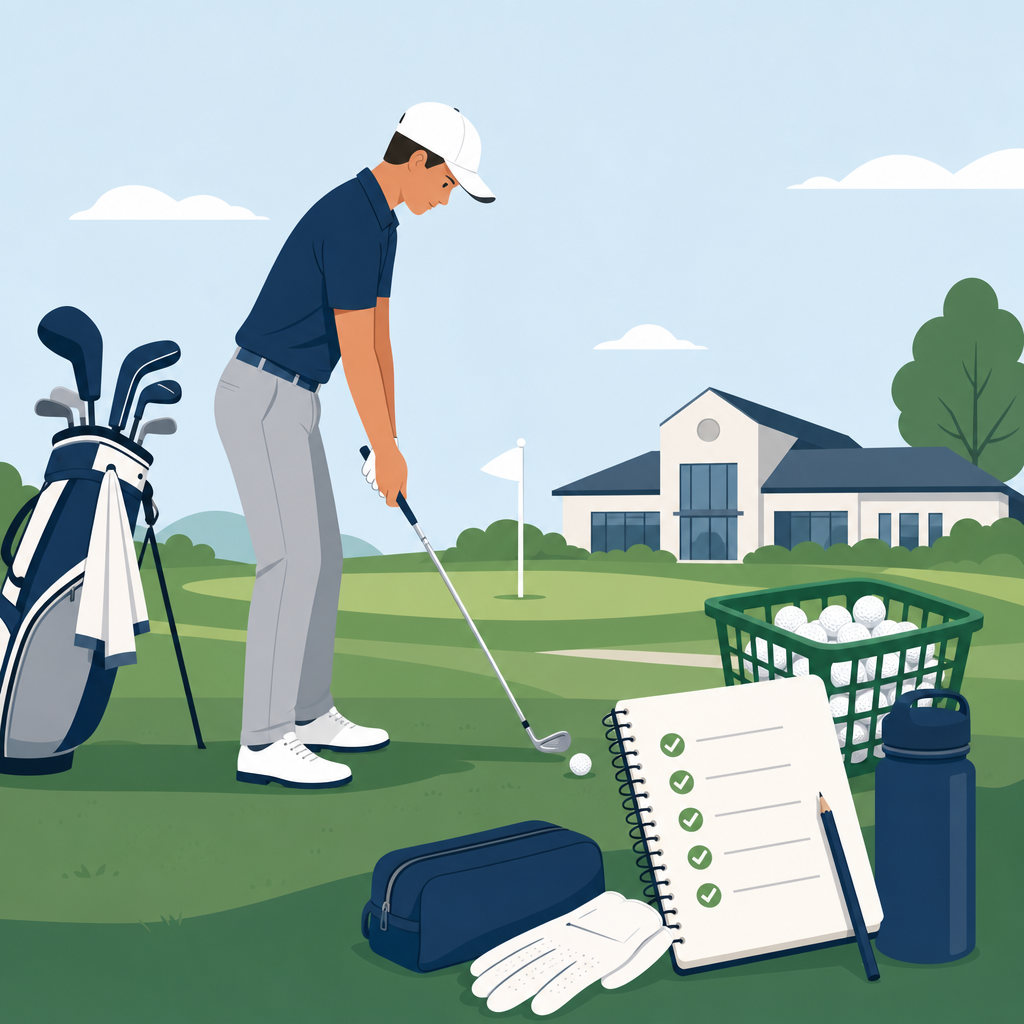
Preparing for a golf academy tryout starts well before you step onto the range. Parents and junior athletes need a clear plan because an academy evaluation is not just about one good ball-striking session. It is a structured look at current skill, long-term potential, habits, coachability, academic fit, and readiness for full-time training. In golf, a tryout usually means an on-course and practice-based assessment where coaches review swing mechanics, short-game control, scoring ability, physical preparation, mental toughness, and how an athlete responds to instruction.
This matters because the decision affects much more than golf technique. A full-time golf academy in Florida can change training volume, school structure, tournament scheduling, and college recruiting opportunities. We have seen strong junior players arrive with solid tournament resumes but weak daily habits, and we have also seen athletes with modest scores stand out because they listened well, managed the course intelligently, and showed a development profile coaches could build on. A golf academy tryout is designed to identify that difference.
For families, the goal is not to impress with polish alone. The goal is to present an honest, prepared version of the athlete. That means understanding what coaches evaluate, building a practical pre-tryout routine, organizing equipment, and treating the day like the beginning of a long-term player development plan. If you prepare correctly, you reduce avoidable mistakes and give coaches a reliable picture of who you are as a golfer and student-athlete.
What coaches evaluate during a golf academy tryout
Most golf academy evaluations focus on five areas. First is technical skill. Coaches watch setup, posture, grip, alignment, swing plane, clubface control, contact quality, distance control, and trajectory management. They are not expecting perfection from a 13-year-old or 16-year-old athlete. They are looking for repeatable patterns and whether the current motion can improve through structured coaching.
Second is short-game performance. In our experience, tryouts often reveal more around the green than on the launch monitor. Wedge distance control, bunker basics, chipping decisions, lag putting, and putts inside eight feet show scoring potential quickly. Junior golfers who can save pars under pressure often project better than players who only stand out with driver speed.
Third is on-course decision-making. Coaches want to see course management, target selection, pre-shot routine, pace, emotional control, and recovery after mistakes. A player who misses a green and makes a smart bogey can leave a stronger impression than a player who forces risky shots. Golf IQ matters because academy training is built around lower scores, not just prettier swings.
Fourth is athletic profile. Strength and conditioning are part of modern junior golf development. Mobility, balance, sequencing, stamina, and basic movement quality affect swing efficiency and injury prevention. A golf academy with integrated sports performance training will evaluate whether an athlete can handle year-round practice, tournament travel, and physical development without breaking down.
Fifth is attitude. Coaches notice punctuality, body language, listening skills, and response to feedback. If an evaluator suggests a setup adjustment, they want to see whether the player can apply it. Coachability is one of the most important factors in a boutique academy environment where individualized development depends on consistent communication.
How to prepare in the four weeks before the evaluation
Good preparation is specific. Do not spend the month before a tryout trying to rebuild your entire swing. Instead, organize practice around the same categories coaches will assess. Build one week around baseline measurement, two weeks around competitive practice, and the final week around sharpening routines and confidence.
Start with an honest skills audit. Track fairways hit, greens in regulation, up-and-down percentage, three-putts, and proximity on wedge shots from common junior distances such as 30, 50, 75, and 100 yards. If you use launch monitor tools like TrackMan, Foresight Sports GCQuad, or FlightScope, record carry numbers and dispersion patterns. These details help you practice with purpose rather than guessing.
Then shift practice toward scoring. Many junior golfers prepare by hitting too many full drivers. A better tryout plan includes wedge ladders, random target practice, pressure putting, and nine-hole simulations where every shot has consequence. If your academy evaluation includes on-course play, rehearse your full routine: yardage, wind check, target, rehearsal, and commitment.
Parents should help manage the structure, not micromanage technique. Make sure the athlete sleeps well, eats consistently, and arrives at the tryout fresh instead of overtrained. The last 72 hours should reduce volume slightly. You want sharpness, not fatigue.
| Timeframe | Primary focus | What to do |
|---|---|---|
| Four weeks out | Baseline assessment | Track scores, dispersion, short-game stats, and fitness limitations |
| Three weeks out | Technical cleanup | Refine setup, contact, and one or two priority swing cues only |
| Two weeks out | Competitive practice | Play pressure games, wedge tests, and on-course decision drills |
| Final week | Routine and recovery | Short focused sessions, sleep, hydration, equipment check, mental rehearsal |
What to bring and how to present yourself
Equipment preparation sends an immediate message. Clean clubs, check grooves, inspect grips, confirm loft gapping, replace worn gloves, and make sure your golf bag is organized. Bring golf shoes suitable for walking, weather-appropriate clothing, a hat, sunscreen, water, snacks, a rangefinder if allowed, yardage book if relevant, extra balls, and tees. If you use stat-tracking apps such as Arccos or Shot Scope, have them ready, but do not let technology distract from performance.
Also bring your competitive history in a simple format. Coaches may ask for recent tournament scores, handicap index, AJGA participation if applicable, junior event schedule, swing video, or goals related to college recruiting. Keep this factual. A one-page player summary with graduation year, scoring range, tournament schedule, academic information, and contact details is useful for families evaluating full-time academy options.
Presentation matters because academy life is structured. Arrive early. Introduce yourself clearly. Make eye contact. Thank staff members. If you are a parent, let the athlete answer most golf questions directly. Coaches are evaluating independence as well as talent, especially for boarding students who need to manage training, academics, and daily routines without constant prompting.
How to perform well on tryout day
The best tryout strategy is steady execution. Begin with a familiar warm-up instead of experimenting. Start with mobility, then short putts, then chips, then wedges, then mid-irons, and finish with driver. This sequence mirrors how the body and nervous system settle into competitive golf. Avoid empty range volume. Every shot should have a target and pre-shot routine.
During the skills portion, focus on quality contact and decision-making. If asked to hit multiple clubs, show normal ball flight and control rather than maximum speed on every swing. In short-game stations, choose practical shots. Coaches prefer a player who selects the percentage option over one who attempts a flashy flop without reason.
On the course, play disciplined golf. Commit to conservative targets when needed. Respect hazards. Manage pace. If you hit a poor shot, reset quickly. Evaluators know junior golfers make mistakes. What they want to see is emotional recovery, problem-solving, and resilience under match pressure.
If coaches offer feedback during the evaluation, listen fully before responding. Then apply the instruction with intent. Even if the change feels unfamiliar, your willingness to adapt is part of the test. We often learn more from an athlete’s response to one correction than from a perfect drive on the first tee.
Questions families should ask before choosing a golf academy
A tryout is also your chance to evaluate the academy. Ask how the golf program structures player development across swing instruction, short-game training, on-course coaching, strength and conditioning, and tournament planning. Ask how often coaches provide video analysis, how progress is measured, and what a normal training week looks like for middle school and high school athletes.
For recruiting-focused families, ask how the academy supports college placement. Strong golf academy programs help athletes build tournament schedules, communicate with college coaches, organize recruiting profiles, and understand the timeline from freshman through senior year. No academy can promise a scholarship, but the right environment should increase preparation and visibility.
Parents should also ask about academics, boarding routines, supervision, transportation, recovery protocols, and communication expectations. International families should ask how the academy supports transitions into U.S. schooling and junior golf competition. Florida is a major advantage here because year-round training, frequent tournament access, and regular college coach visibility create a practical development setting that many seasonal programs cannot match.
Common mistakes that hurt golf academy evaluations
The most common mistake is trying to impress instead of trying to compete well. Overswinging, forced hero shots, and changing equipment days before the evaluation usually backfire. Another mistake is neglecting the short game. Many families underestimate how quickly coaches can identify scoring weakness inside 100 yards.
Some athletes also arrive without understanding the academy’s expectations. A full-time training environment demands consistency, not occasional intensity. Poor punctuality, weak fitness habits, negative body language, or dependence on parents for every answer can raise concerns even when the player has talent.
Finally, do not treat the tryout as a one-day verdict on your future. Coaches are making a development decision. They are asking whether this athlete fits the program, benefits from personalized coaching, and can grow inside a structured golf academy model. Your job is to be prepared, composed, and honest about where you are.
Preparing for a golf academy tryout comes down to clarity and discipline. Understand what coaches measure. Practice the skills that lower scores. Arrive with organized equipment, a calm routine, and the mindset of a serious junior golfer. For parents, focus on fit as much as performance. The right golf academy should support athlete development, academics, recruiting, and daily structure in a way that makes long-term sense.
Florida gives junior golfers a real training advantage because year-round outdoor practice, competitive tournament access, and consistent coaching create momentum that seasonal programs often struggle to match. When that environment is paired with small-group instruction and individualized planning, a tryout becomes more than an evaluation. It becomes the first step in a complete development process.
If you are comparing programs, start by requesting an evaluation plan, daily schedule, and recruiting overview from the academy. Those three pieces will tell you how seriously the program approaches player development and whether it fits your athlete’s goals.
Frequently Asked Questions
What do golf academy coaches usually evaluate during a tryout?
Golf academy coaches typically look at far more than whether a player can hit a few impressive shots on the range. A tryout is usually a broad evaluation of current performance, long-term upside, and overall fit for a full-time training environment. Coaches often assess full-swing mechanics, ball flight control, short-game touch, putting fundamentals, course management, and scoring habits under normal playing conditions. They also pay close attention to how a player handles different lies, responds to mistakes, follows instructions, and adapts to feedback in real time.
Beyond technical skill, coaches are often evaluating coachability, emotional control, work ethic, practice habits, physical readiness, and competitive maturity. For junior golfers, academic fit may also matter, especially if the academy combines intensive golf training with school expectations. Coaches want to know whether the player can manage a structured schedule, communicate well, and thrive in an environment built around long-term development. In many cases, they are not searching for a perfect player. They are looking for a player with sound fundamentals, a good attitude, clear potential, and the discipline to improve consistently over time.
How should a junior golfer prepare in the weeks leading up to a golf academy tryout?
The best preparation starts several weeks before the tryout, not the night before. A junior golfer should build a simple and realistic plan that covers technical preparation, scoring practice, physical readiness, and mental routine. That usually means dividing practice time across full swing, wedges, bunker play, chipping, putting, and on-course decision-making rather than focusing only on ball striking. Players should spend time on drills that improve contact quality and consistency, but they should also track outcomes such as fairways hit, greens in regulation, up-and-down percentage, lag putting, and performance from common scoring distances.
It is also important to simulate tryout conditions. Practice with purpose, use pre-shot routines, play holes while keeping score, and create pressure by setting targets and consequences. If possible, the player should get comfortable performing in front of others, since many tryouts include observation by multiple coaches. Physical preparation matters as well. Players should maintain mobility, basic strength, endurance, hydration habits, and sleep routines so they arrive fresh rather than fatigued. Parents can help by organizing logistics early, confirming schedules, gathering any required records or school information, and keeping the build-up calm and structured. The goal is to arrive prepared, confident, and organized, not overworked or anxious.
What should players and parents bring to a golf academy tryout?
Players should bring all essential golf equipment in clean, organized condition, including a full set of clubs, golf balls, tees, glove, rangefinder if permitted, rain gear, golf shoes, hat or visor, towel, water bottle, snacks, and any weather-specific layers. It is wise to check grips, clean grooves, and make sure nothing is missing or broken before travel. A notebook can also be helpful for writing down instructions, observations, or follow-up questions. If the academy has provided a schedule or checklist, follow it exactly so there is no uncertainty on arrival.
Parents should also be ready with any supporting information the academy may request, such as tournament results, academic transcripts, class schedules, medical information, training history, or swing and scoring records. Even if these items are not formally required, having them available shows preparation and makes conversations easier. Just as important as what you bring is how you present yourselves. Arrive early, dress appropriately, and be respectful to staff, coaches, and other families. A tryout begins the moment you check in. Organization, professionalism, and preparedness can leave a strong impression before the player hits a single shot.
How can a golfer stand out at a tryout without trying to impress too much?
The best way to stand out is through consistency, composure, and coachability rather than by forcing highlight-reel shots. Many players make the mistake of swinging harder than usual or attempting risky shots to prove talent. Experienced coaches generally see through that very quickly. They are often more impressed by a player who manages the golf ball, follows a routine, makes smart decisions, and recovers well after mistakes. Solid fundamentals, predictable contact, disciplined short game, and steady behavior usually say more about future potential than one exceptional drive.
Coachability is another major separator. Players who listen carefully, apply feedback quickly, ask smart questions, and maintain a positive attitude often stand out in a meaningful way. Body language matters too. Coaches notice whether a player reacts poorly to bad shots, loses focus, or blames conditions. They also notice resilience, self-control, and readiness to move on to the next task. Parents can help by allowing the athlete to own the experience rather than stepping in too often. The strongest impression usually comes from a player who looks prepared, behaves professionally, competes with maturity, and demonstrates a genuine willingness to learn.
What are common mistakes to avoid before and during a golf academy tryout?
One of the most common mistakes is preparing too narrowly by focusing only on swing mechanics or range performance. A tryout usually includes much more than that, so players who neglect putting, short game, on-course strategy, and mental discipline can appear less complete than they really are. Another mistake is overtraining in the final days before the evaluation. Trying to make major swing changes late, hitting too many balls, or arriving physically tired can hurt performance. Players are usually better off sharpening routines, reviewing fundamentals, and showing up rested and clear-minded.
During the tryout, avoid pressing, overswinging, making excuses, showing poor body language, or treating every shot like a make-or-break moment. Coaches understand that nerves are normal. What they want to see is how the player responds. Rushing through routines, ignoring instructions, or becoming visibly frustrated can raise concerns about maturity and readiness for academy life. Parents should also avoid putting extra pressure on the player, speaking for them unnecessarily, or trying to influence coaches. The strongest approach is simple: prepare thoroughly, communicate respectfully, stay composed, and let the overall body of work speak for itself.