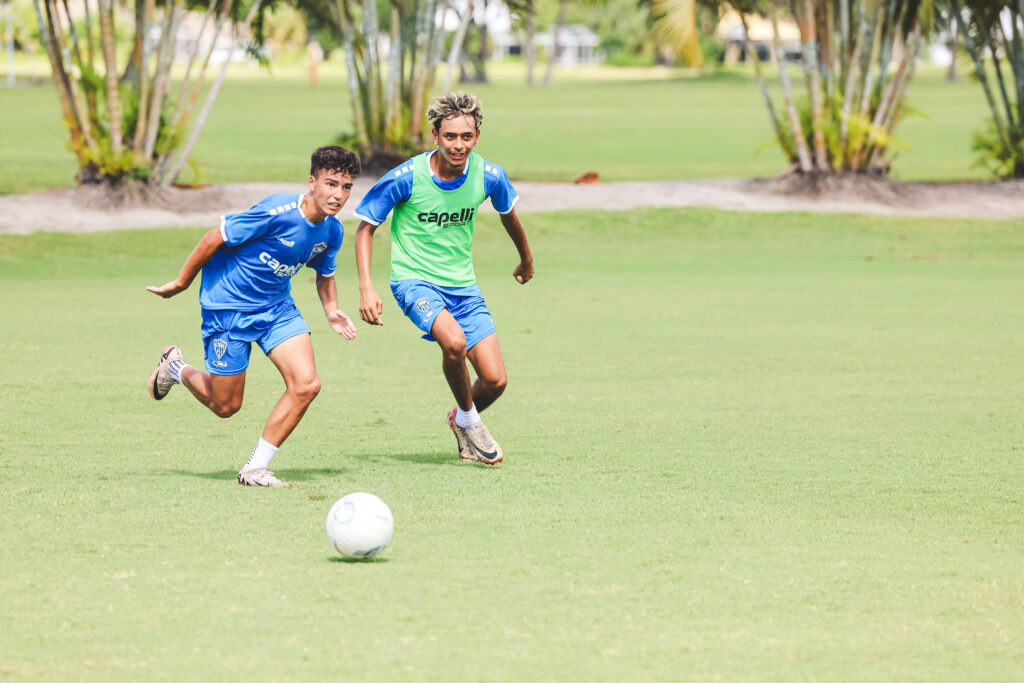
At some point, serious soccer families ask the big question: Where should we be based if we really want to maximize development? Increasingly, the answer points to Florida. Between weather, competition, coaching depth, and academic options, the Sunshine State has become a magnet for players who want more than a good team—they want a true high-performance pathway.
This article explains why Florida stands out, what that means in practical terms for families, and how to decide whether a move or seasonal block is right for your player.
1. Climate: Training Outdoors Almost All Year
Weather is more than a lifestyle perk—it’s a performance tool. In many regions, players lose months to snow, rain, or frozen fields. In Florida, those limitations almost disappear.
Year-round outdoor training allows players to:
- Maintain consistent technical work instead of long winter breaks
- Build real match fitness in authentic conditions
- Get comfortable playing in heat and humidity—common in college and pro environments
When a player can train and compete outdoors nearly 12 months a year, their touch, decision-making, and conditioning evolve faster than if they’re constantly stopping and starting.
2. Depth of Competition: Strong Opponents Every Week
One of Florida’s biggest advantages is the density of serious players and teams. The state attracts:
- Top-level youth players from across the U.S. and abroad
- High-level club and academy programs across multiple age groups
- College and professional players who use Florida as a training base
That concentration creates a competitive ecosystem where:
- Training sessions are sharper because teammates and opponents push each other
- Local leagues and events feature strong competition without constant long-distance travel
- Players become used to high-intensity environments from an early age
Instead of waiting for rare “big games,” Florida-based players can experience demanding matches regularly, which accelerates learning and resilience.
3. Coaching Ecosystem: Specialists at Every Stage
Florida’s soccer landscape isn’t just about quantity; it’s about quality and variety of coaching. Across the state you’ll find:
- Technical development specialists for younger players
- Position-specific coaching for goalkeepers, defenders, midfielders, and forwards
- Performance coaches focused on speed, strength, and conditioning
- Staff experienced in college recruiting and professional pathways
This means you can build a support team tailored to your child’s age, position, and goals. A 10-year-old learning fundamentals needs a different environment than a 17-year-old targeting the next level. In Florida, it’s easier to adjust the program as your player grows.
4. Year-Round Match Play and Tournament Access
Access to regular, well-structured match play is critical to development. Florida’s event calendar and geography create several advantages:
- A wide range of local leagues and club competitions
- Frequent tournaments at multiple levels throughout the year
- Regional and national showcases that attract college scouts and higher-level opposition
Because many events are within driving distance, families can build an ambitious but sustainable competition schedule. Less time spent on planes and long-haul trips means more time resting, training, and studying.
If you’d like guidance on structuring a smart schedule around training blocks and key events, you can contact us and talk it through with our team.
5. Balancing Soccer and School in Florida
High-performance training should never mean sacrificing education. Florida offers a range of academic options that can be coordinated with serious soccer:
- Traditional schools with flexible arrangements for training and travel
- Accredited online and hybrid programs
- On-site or partnered academic providers linked to training centers
- Tutoring and study support built into daily routines
A well-designed setup ensures players can pursue ambitious soccer goals while maintaining strong grades and preparing for college—whether or not they plan to play at the next level. Time management, responsibility, and communication skills developed in this context are valuable far beyond the field.
6. Building a Professional Mindset Early
Training in a high-performance environment teaches more than ball skills. In Florida, serious players quickly learn:
- How to manage daily training loads and recovery
- How to arrive prepared—physically and mentally—for sessions and games
- How to communicate with coaches and staff
- How to handle competition for places and honest feedback
These habits are the foundation of a professional mindset. Even if your child’s ultimate path is college soccer or a future career in sports science, coaching, or another field, learning to “live like an athlete” is a powerful part of their growth.
7. Is a Florida Move Right for Your Family?
Not every family will relocate full-time to Florida, and that’s completely normal. There are several ways to benefit from the environment:
- Short training blocks – Multi-week stays focused on technical and physical development.
- Seasonal programs – For example, winter or pre-season blocks when conditions are poor at home.
- Full-time relocation – Combining training and schooling in Florida as a long-term base.
Which option makes sense depends on:
- Your child’s age, level, and long-term goals
- School requirements and family commitments
- Financial and logistical realities
A thoughtful assessment of your current setup—coaching, competition, and facilities—compared with Florida-based options will help clarify whether a move or seasonal training period would add real value.
8. How to Evaluate Florida-Based Soccer Programs
Because Florida has many programs, careful evaluation is essential. Key questions to ask:
- Player-to-coach ratio: Will your child receive meaningful, individual attention?
- Coaching philosophy: Do they prioritize long-term development or short-term results?
- Integration of physical preparation: Is there a structured plan for strength, speed, and conditioning?
- Academic coordination: How do they support schoolwork, tests, and study time?
- Pathway support: Can they help with college recruiting, showcases, or higher-level opportunities?
Visiting in person, watching training, and speaking with current families can give you a realistic feel for daily life, standards, and culture.
If you’d like a second opinion as you compare options, our team can help you interpret what you’re seeing and hearing. You’re welcome to contact us for a conversation about fit and next steps.
9. Common Concerns Families Have About Florida
“Will the heat be too much?”
With appropriate acclimatization, hydration protocols, and training design, players can adapt safely to the climate. Many programs in Florida have well-established routines for managing heat and humidity.
“Isn’t it only for elite players?”
While there are certainly high-level environments, Florida includes a spectrum of programs—from foundational development to advanced performance. The key is matching your child’s current stage and readiness to the right setting.
“What if we move and it doesn’t work out?”
Shorter test periods, such as seasonal stays or trial blocks, can give you real-world insight before making long-term commitments. Many families start with this approach.
10. Bringing It All Together
Florida’s blend of climate, competition, coaching depth, and academic flexibility makes it a powerful base for serious soccer development. Players can train outdoors almost year-round, face strong opponents regularly, and access support systems that align soccer and schooling.
The best choice for your family will depend on your child’s goals, current environment, and practical realities—but understanding what Florida offers can help you make clearer, more confident decisions about the next steps in their journey.
Frequently Asked Questions About Sunshine State Soccer: Why Florida Offers the Best Training Environment
1. Is Florida only suitable for elite or professional-track players?
No. While Florida is home to many high-performance environments, it also offers strong development options for players at earlier stages. Younger or less experienced players can benefit from consistent outdoor training, quality coaching, and regular match play. The key is not whether your child is “good enough” for Florida, but whether you can find a program that fits their current level and personality. Many families start with shorter training blocks to gauge readiness and see how their child responds to the environment before making bigger commitments.
2. How do families typically handle schooling when training in Florida?
Families use a range of schooling options: traditional local schools with flexible arrangements, accredited online programs, or academic partners connected to training centers. The most successful setups treat academics as a core priority, not an afterthought. That often means built-in study time, tutoring support, and regular communication between coaches and teachers about tournament travel or schedule changes. When done well, this structure helps players maintain or even improve their grades while training seriously, building strong time-management and self-organization skills along the way.
3. What are the main benefits of short-term training blocks in Florida?
Short-term training blocks—two to six weeks, for example—give players a concentrated period of high-quality training without requiring a full relocation. Benefits include exposure to stronger competition, access to specialized coaching, and consistent outdoor sessions, especially during winter months elsewhere. These blocks can be used to target specific goals, such as pre-season preparation or technical upgrades. They also give families a low-risk way to experience the environment, evaluate programs, and decide whether longer stays or a permanent move might be helpful in the future.
4. How does training in Florida compare to staying in a strong local program elsewhere?
If you already have excellent coaching, competitive leagues, and good facilities at home, you may not need to relocate. However, many regions lack year-round outdoor access or a dense pool of serious players. Florida can complement strong local programs by providing periodic intensive blocks that focus on specific areas of development. For others, it becomes a full-time base that solves multiple challenges at once. The right choice depends on what your current environment is missing—weather, competition, specialized coaching, or broader pathway support.
5. How can I tell if a Florida-based soccer program is genuinely high quality?
Look beyond marketing and ask detailed questions. High-quality programs can clearly explain their development philosophy, show how they individualize plans, and describe how they integrate technical, tactical, physical, and mental training. They track progress over time rather than just celebrating isolated results. You should see organized sessions with appropriate intensity, good player-to-coach ratios, and positive but demanding standards. Speaking with current families, observing training, and understanding how academics are supported will give you a real sense of whether a program truly aligns with your child’s needs and your family’s values.